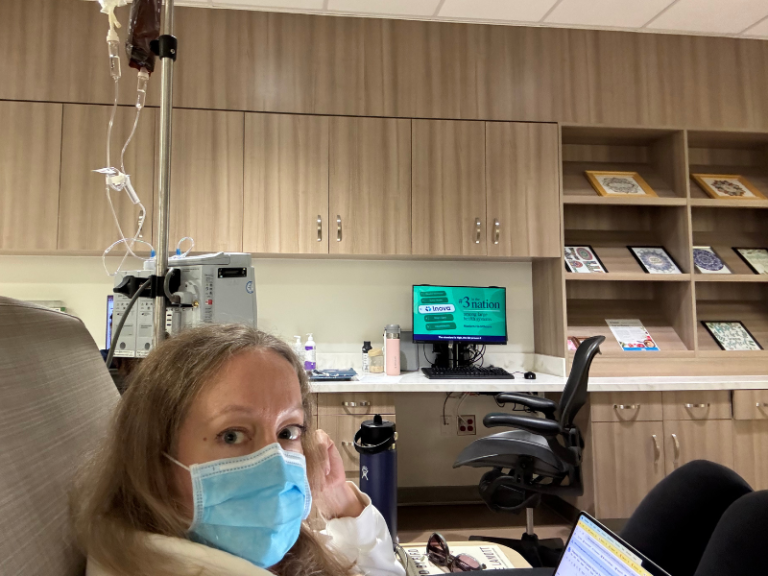
Forty-one weeks and three days after I first heard the words “you have cancer,” I’m officially in remission.
From both primary cancers.
I’ve been moved to maintenance and surveillance, which’ll last approximately five years. Details about what that means are below.
Here’s the journey by the numbers—from the first suspicious mammogram to remission:
Biopsies: 4
Primary cancers: 2
Mammograms: 8
Ultrasounds: 4
MRIs: 4
CT scans: 6
X-rays: 2
Colonoscopy: 1
Sigmoidoscopy: 1
Digital rectal exams: 2
Echocardiograms: 2
EKGs: 3
Port placements: 1
Surgeries: 3
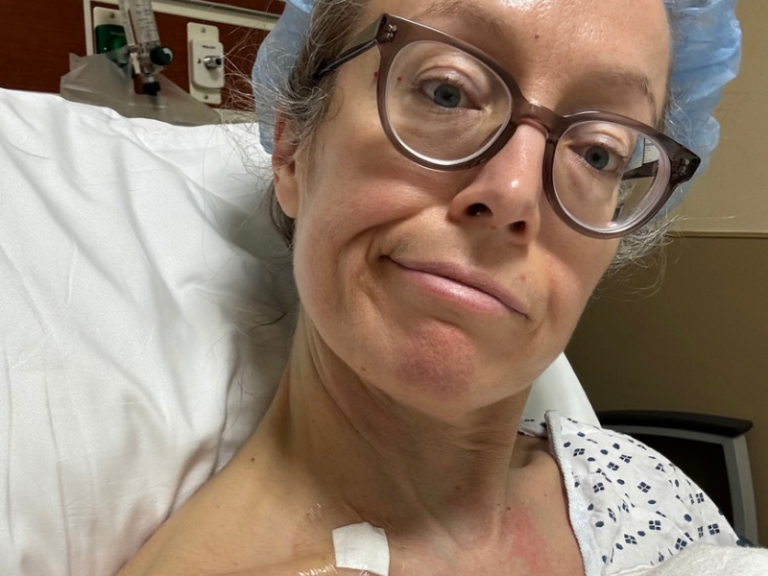
Nights in the hospital: 4
ER visits: 1
Body parts removed: 1 breast, 1 rectum, 38 lymph nodes
Rounds of FOLFOX: 6
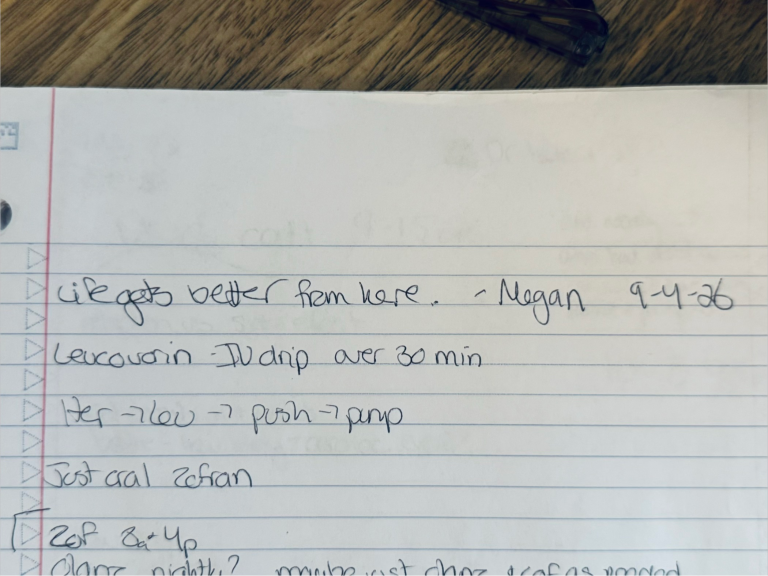
Rounds of 5FU: 1
Rounds of Herceptin: 9 (and counting)
Bowel preps: 2
Enemas: 3
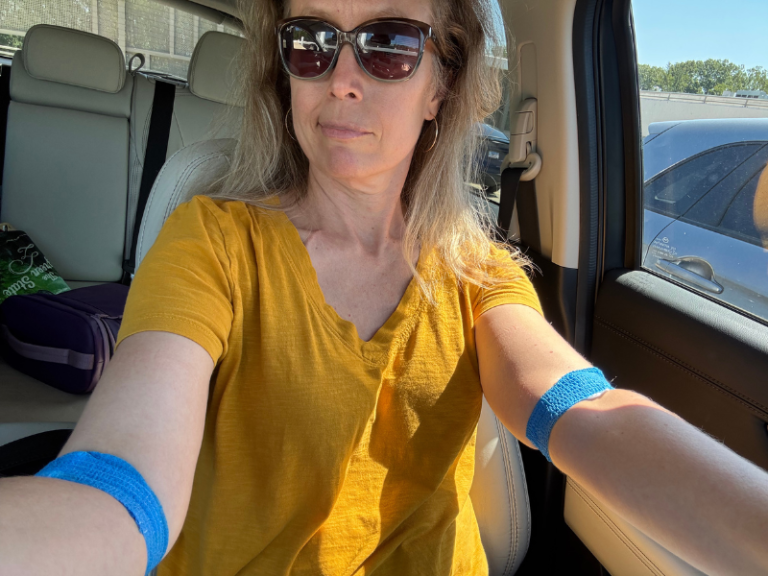
Blood tests: 63
IVs: 10
JP drains: 4
PT sessions: 27
Acupuncture appts.: 27
Therapy appts.: 41
Support group sessions: 6
Prescriptions: 15
Scars: 12
Total hours in appointments (including being hooked up to the chemo pump; excluding commuting, travel, prep, recovery, and research): 838. An average of 20.4 hours per week.
Total medical claims: 232
Total medical charges billed: $656,483.29
My out-of-pocket costs (excluding OTC medications, supplies, acupuncture, travel, etc.): $11,775.94
Before January 21, 2026, I had never even had an IV.
And I did it all without a partner to come home to.
Here’s what maintenance and surveillance look like:
BREAST CANCER
- I’ll continue to receive Herceptin infusions every three weeks until the end of February 2027. I’ll also continue meeting regularly with my breast oncologist.
- I’ll keep my port through the end of February/March, when it will be removed. (Twilight sedation only.)
- At some point, I’ll have breast reconstruction revision surgery. Thanks to the Women’s Health and Cancer Rights Act (WHCRA)—one of my favorite things I’ve learned about during this process—insurance plans subject to the law must cover qualifying post-mastectomy reconstruction, including necessary revisions.
- I’ll have mammograms of my right breast every six months for the next three to five years. They’ll be read on the spot, and if anything looks suspicious, I’ll get an ultrasound immediately. Since my left breast has been reconstructed with an implant following my mastectomy, it no longer requires routine mammograms.
- I’ll start endocrine therapy—Tamoxifen—shortly. The plan is that I will take it for five years. Maybe ten. Tamoxifen blocks the effects of estrogen in breast tissue and can cause a number of menopause-like symptoms. It can also come with some significant risks and side effects. It’s one of the things I’ve been most scared of—and most upset about.
As if losing a breast isn’t enough, the fun of having your body f’d with gets to continue. Here’s what I’m doing to prepare:
- My GYN has prescribed low-dose vaginal estrogen to help manage the genitourinary symptoms of menopause, including vaginal dryness, irritation, burning, painful intercourse, and recurrent urinary tract infections. Research suggests that low-dose vaginal estrogen doesn’t significantly increase recurrence risk in breast cancer survivors. And yes, I’ll cross-check that with my breast oncologist before starting. But the science is encouraging. Here’s some of it.
- My GYN also referred me for a DEXA scan to establish a baseline for my bone density, which we’ll monitor while I’m on endocrine therapy.
- I have Veozah to help manage hot flashes, although it looks like the medication will no longer be covered when I have to change insurance providers at the end of the year. Because, of course.
- According to PREDICT Breast Cancer, the estimated benefit of endocrine therapy in my case may be relatively small so there could be an option to not take it. I’m also trying to practice “maybe we don’t need to solve all the problems before we know what the problem actually is” and just take the drug and see what happens. Mindblowing concept.
RECTAL CANCER
Here’s the surveillance plan for the next five years:
- Blood work: CBC, CMP, CEA, and Signatera every three months for three years, then every six months for two years.
- Oncology appointments: I’ll meet with Dr. Cannon, my colorectal oncologist, on the same schedule.
- CT scans: Chest, abdomen, and pelvis every six months for the first three years, then annually for the following two years.
- Colonoscopies: Annually, performed by my colorectal surgeon.
The way Dr. Cannon explained remission was:
“You are a winner but you’re not a champion.”
“You’ve won the battle, not the war.”
I can be—will be—a champion in five years.
Also, thanks, Dr. Cannon, for inserting a grey cloud in my sunny sky. I thought he was my favorite.
(He is.)
FOR BOTH
- I’ll continue physical therapy for mild neuropathy, lingering tension on the mastectomy side, new pain in my right shoulder, and reconditioning.
- I’ll continue to do acupuncture for nervous system regulation, loads of mental stuff, sleep, scar repair, and any side effects that come from Tamoxifen.
- I’ll meet with my trainer to work on reconditioning as well.
WHY WE DECIDED TO STOP CHEMOTHERAPY
My original treatment plan was based on the protocol studied in the PROSPECT trial.
The goal of the trial was to determine whether chemotherapy before surgery (neoadjuvant chemotherapy) could shrink rectal tumors enough that certain patients could safely avoid radiation and proceed directly to surgery.
Mine did. No radiation needed—for either cancer. A huge win.
The original plan was for me to complete six additional rounds of chemotherapy after surgery (adjuvant chemotherapy), this time without oxaliplatin.
I completed one.
And then I had a very bad reaction, which my doctors believe was caused by coronary vasospasm.
Not exactly something we want to repeat.
After weighing the potential benefit of additional chemotherapy against the risks of another serious cardiac reaction, Dr. Cannon recommended stopping treatment.
We also discussed research from the IDEA collaboration, which examined shorter versus longer courses of adjuvant chemotherapy in stage III colon cancer (very similar to rectal cancer).
That research helps inform conversations about how much chemotherapy is enough, although it doesn’t directly answer that question for my particular situation. I mean, what would?
In my case, Dr. Cannon estimated that the additional benefit of continuing chemotherapy would be very small—approximately 0.9 percentage points.
Five more rounds of chemotherapy, with the possibility of another serious cardiac event, for less than a 1% point improvement?
Not a 1% I’m interested in doing.
So, we’re done.
No more chemotherapy.
AN ANSWER TO AN FAQ:
Yes, I will continue writing. Yes, I want to (am going to) turn this into a memoir. There’s still a lot I haven’t shared and a lot more to go as I navigate maintenance and surveillance. It’ll be… interesting! As all of this has. To say the least.
ANOTHER ANSWER TO ANOTHER FAQ:
How am I feeling?
I’m feeling all the things.
Thrilled.
Relieved.
Scared. (I want to be a champion.)
In shock.
“Wait… so we’re just, done? Wasn’t I supposed to wear an outfit and have a cake and ring a bell or something?”
And, happy.
But most of all, so absolutely, incredibly proud of myself.
What I just did was unreal. Unreal.
When I drafted this post and looked at the beginning of it, I thought, “That’s insane! What kind of person can do that?!”
The answer is, me.
I could do that.
And I did.
To read other posts, visit the archive here.
To listen to an audio version of this on Spotify, click here. To listen on Apple Podcasts, click here.
To get posts sent directly to your inbox, click “Subscribe” at the top of the page.